A reflection on the lessons for the seventeenth Sunday after Pentecost.
When was the last time you felt satisfied? Or content with what you have and who you are? In our modern western culture it seems we are bombarded with the thought that we should never be satisfied. We should always want more: more money, a better job/house/car/clothes, more power, the latest gadgets even though what we have still works, more stuff as if our life was defined by the things we accumulate in our storage units. We live in a consumer driven culture and the only way to keep it going is to convince us we always need more. But this mindset of not being satisfied isn’t new to us in the twenty first century. Our stories of the humans whom God first entered into relationship with wanted more than they had been given. God gave them all that they needed to thrive, food from every tree in the garden, save one. And they had to have the one.
In the story we read today of the Israelites in the wilderness, again God has provided what they had asked for – freedom from the oppressive slavery (there is no other kind of slavery but I wanted to use more word to emphasise the horrific nature of thinking we can own another person – perhaps more can be helpful sometimes?) of Egypt. God led them on a strategic journey to avoid danger and confound and defeat the Pharaoh’s armies. But when they were safely away, they began to complain, retelling the story of their slavery into one of abundance. They claimed they’d rather be enslaved that free! Sometimes it feels more comfortable or even safer in a bad situation we know than to venture into an unknown circumstance even as God promises to be with us and show us a better way.
In response to their grumbling, God didn’t say “fine, have it your way” but instead God provides what they need with instruction to be satisfied with what God has provided, just as God had done with the people in the garden in our creation story. And they had exactly enough to sustain them each day – sustaining bread in the morning and strength building protein in the evening. If you know how the story goes, you know that eventually this wasn’t enough and they continued to find things to complain about and demand more from God. And they didn’t even have TV commercials or Social Media to tell them they shouldn’t be satisfied with enough!
In the Gospel reading for today, Jesus tells a story of people who are sufficiently provided for and yet are not satisfied because they compare themselves to others. Soren Kierkegaard said, “Comparison is the most dangerous acquaintance love can make.” When we live with a mindset of comparison – measuring others, what we have, our relationships, our life against some human ideal of good or perfect – we invite envy and dissatisfaction. When we look to God to define who and Whose we are and find our completeness in God’s Love, we find satisfaction and peace of mind.
The people in Jesus’ story are all given what they were promised, a day’s wages. And yet those who defined their worth in comparison to others became dissatisfied and envious and complained to those who provided what they needed. And their employer reminded them they received what was promised them, a day’s wages, enough for the day. I see this as a story not only of being satisfied with having enough but also a lesson in what it looks like when a culture sets out to ensure everyone has enough not just a certain few.
This employer provided work for all who wanted it and provided a liveable wage for everyone who worked. In this story, the first and last aren’t reversed but are equalised. When the last become first and the first become last, there is no first and last. There are only human beings tending to each other’s needs so we all thrive. This is a story of our interdependence and connectedness as God’s beloved children.
Taken in conjunction with what we’ve read the past two Sundays (see Matthew 18), Jesus is telling us what it looks like in flesh and blood to live into God’s Kingdom-on-earth-as-in-heaven. It isn’t just a lesson of the past to correct the disciples who were anxious about who Jesus considered to be the best disciple, but an everlasting lesson of how we are to pattern our lives in our cultural context today. It may not be easy and many around us will consider us fools or worse but it is how and where we are to follow Jesus.
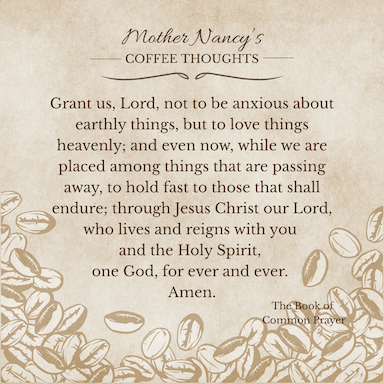
When we judge what others have by what we have done and what we think we’ve earned, we’ve attempted to flip the first with the last instead of doing away with this competitive comparative thinking. The life God created and calls us to isn’t a competition but a companionable journey. When we allow ourselves to be “anxious about earthly things” we are seeking a temporary identity or worth based on how we compare to those around us. Do I have more than they do? Am I better than they are? How do others see me and what judgements do they make? This is not how Love works.
When we look to God for our worth and identity we come to know who and Whose we truly are, our own self and others. This is what it is to live the everlasting life we’ve been given, the life we are made to live. When we are satisfied with enough, life feels abundant. Abundance in God’s Kingdom-on-earth-as-in-heaven isn’t about having excess but an unending supply of what we need. Our competitive consumer culture offers only a life of scarcity where enough is never enough.
Life as Paul tells the church in Philippi: in a manner worthy of the gospel of Christ … you are standing firm in one spirit, striving side by side with one mind for the faith of the gospel, and are in no way intimidated by your opponents.
And let me remind you, you are enough for God to love you. There is nothing we can own, no deed we can do, nothing we can earn that makes God love us any more or any less than God loves us. Our appropriate response to this amazing, life-giving, liberating love is to let it be enough.
Keep lovin’ louder than the hate, Y’all!