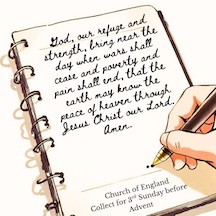
A reflection on the Gospel for Sunday 8 November 2026 (3rd Sunday before Advent & Remembrance Sunday).
Jesus said THEN the Kingdom of heaven is like this …. If you’ve been reading my posts for a while you know that when we encounter a connector word such as then or therefore, I’m going to say we need to look back at what just came before. What we know as chapters and verses were not a part of the original text. These are one continuously flowing story. So, just before Jesus tells this parable of the ten bridesmaids, he has come out of the temple and predicted the destruction of the temple and the end of the world as we know it (anyone else singing the REM song now?). Jesus talks about being watchful and faithful.
And then he says the kingdom of heaven is like a group of women who go to wait for the groom’s arrival. Some were prepared and some were not. So how do we take this ancient wedding ritual and make sense of it today? Before we answer that question, let’s first talk about the Kingdom of heaven. Heaven is God’s space. In our creation stories, God and humans inhabited the same space in the garden. But when we humans decided to choose our own way instead of God’s Way, God’s space and our space were separated.
The whole of our scriptures is the story of God trying to draw us back into God’s space if only we would live as God created us to be, in tune with God’s Way of justice, compassion, and love. god isn’t looking for ways to keep anyone out. God is always offering us the invitation to enter in. Jesus often said the Kingdom is at hand. Right here within our grasp if we would just learn from all that Jesus teaches us in his preaching and parables what it is to live in God’s Kingdom-on-earth-as-in-heaven now.
Heaven isn’t some etherial space we go when we die. It is a real and tangible place where God reigns and we humans experience the presence of God. What that looks like after our death is a great mystery. But Jesus tells us over and over again what it looks like now, here on earth.
The Kingdom of heaven is like when we live life among our fellow humans compassionately, justly, and lovingly, as Jesus shows us in flesh and blood how to live. In the rhythms of our days and weeks and season and years, our lives are shaped by God’s Way.
But what about that part of this parable where the wise women refuse to share what they have with the others. How is that being like Jesus? Jesus isn’t talking about sharing things, he has already made it clear that we are to work together to ensure we all have what we need, but about our attention and faithfulness. We don’t know when God’s Kingdom will be fully realised again as it was in the beginning. But we can always be on the lookout for when God’s space and our space overlap here, when we experience the Kingdom Life through the compassion and kindness of others, when we work toward justice and peace wanting everyone to flourish.
I can share what tangible things I have with you but what I can’t share or borrow is the faith that reassures me that God will set all things right again. I can tell you about my faith and how knowing God and feeling God’s presence with me sustains me, but that doesn’t make it yours. This confident faith comes from knowing God and Knowing who we are as God’s Beloved and just like any other relationship, the way we get to know God is to spend time with God – in worship, in prayer, in scripture, and in quiet contemplation. The wise women of Jesus’ parable are the ones who understand this, that our faith is grounded in relationship with the One who made us. The foolish ones expect to just conjure up what God provides – strength, courage, compassion, wisdom – without nurturing their own relationship with God.
In those moments when we feel like it’s the end of the world as we know it and we aren’t sure if we’ll be fine or not, it is our relationship with God that sustains us. We carry it with us as the wise women carried their oil. Our ongoing relationship with God is what enables us to know God’s presence in all the moments of our life, in joy and in struggle.
And don’t fret, this story isn’t telling us it’s too late to begin nurturing our own relationship with God. It’s never too late. And this parable is of a wedding feast! A joyous event not a scary one. The point of the parable is that we shouldn’t just tend to our relationship with God when we are struggling but always, every day, even in times of joy like a wedding celebration, so that when we do face the inevitable struggles in the regular rhythms of our days and weeks and seasons and years, our oil, our faith, our relationship with God will sustain us. We will be aware of God’s presence always in all situations.
And, when we hear Jesus’ words ‘I do not know you’ we need to think deeper than just the surface meaning. Scripture clearly tells us that God knows us better than we know ourselves. Think about a time when someone you thought you knew acted out of character from what you expected based on your knowledge of them. We are made to be in relationship with God. When we choose not to live in relationship with God, we are acting out of character from who we are created to be. We are made to be in relationship with God and this relationship needs nurturing on our part.
The Kingdom of heaven is like this: God desires to be with us and we become aware of God’s presence as we spend our life knowing God more and more. God’s presence with us isn’t a payment for good behaviour, it is the fruit of relationship with the One who made us in love, with love, for love, and to love. God is with us always, in the ordinary moments, in the celebratory moments, and in the difficult moments. Our purpose is to keep our attention on God and who we are because of God our Loving, Live-giving, and Liberating Creator.
We are wise when we let God shape our world as we know it. And that will make us feel very fine, indeed.
Keep Lovin’ louder than the hate, Y’all!

