A sermon preached as St. Martin’s Episcopal Church, Mason, TX.
The lectionary readings for the 3rd Sunday of Easter are here.
What have you hoped for recently? In our gospel reading this morning, Cleopas and his companion, both disciples of Jesus, had hoped that Jesus was the one to redeem Israel. And they are thinking that they hoped in vain. Jesus, or this uninformed stranger as they see him, describes to them that what they expected God’s plan would look like was different than what God actually had planned all along. Their hope came to fruition, it just didn’t look like what they thought it would. And yet, they still didn’t recognize what – or who – was right in front of them.
Do you ever do that? Let your expectations of what you hope for blind you to the hope being fulfilled? We hope our children grow up to be healthy, mature, productive adults. But perhaps our expectation is that they become a teacher and instead they choose to be a public servant and are happy and love what they do. Our hope is still fulfilled, they are healthy, mature, productive adults, even if our expectations aren’t.
It’s challenging, I think, for many of us to separate expectations from hope. Expectations are how we imagine or plan the way something will play out. But how is that different from hope?
Hope isn’t wishful thinking. Hope is the confidence that comes with knowing God is God and we are not. It is trusting in God’s Way of Love even as the world seems overflowing with hate and anger and fear. Hope gives us the strength and courage to stand firm in our faith while being open to seeing and hearing God in ways we don’t expect.
The disciples, including the many women who followed Jesus, expected the messiah to come and overthrow the Roman occupation as the way to fulfill the hope they held in God’s promises to redeem God’s Kingdom-on-earth-as-in-heaven. But instead the chief priests, temple leaders, and Roman government murdered Jesus. Jesus’ followers couldn’t see that their hope had been fulfilled because it didn’t happen as they had expected it to.
If we expect God’s wrath to rain down on those we don’t like, we haven’t put our hope in the God of invitation. If we expect God to destroy this earth some day when we’ve used it all up, we haven’t put our hope in the God of restoration and redemption. If we expect God to condemn those we consider unredeemable, we haven’t put our hope in the God of resurrection.
When we expect God to show up with the power of Love to rescue the cast aways, redeem the penitent, and restore the broken, we’ve placed our hope in the God who pursues us and calls us beloved and we can offer this hope to others as the Good News of God.
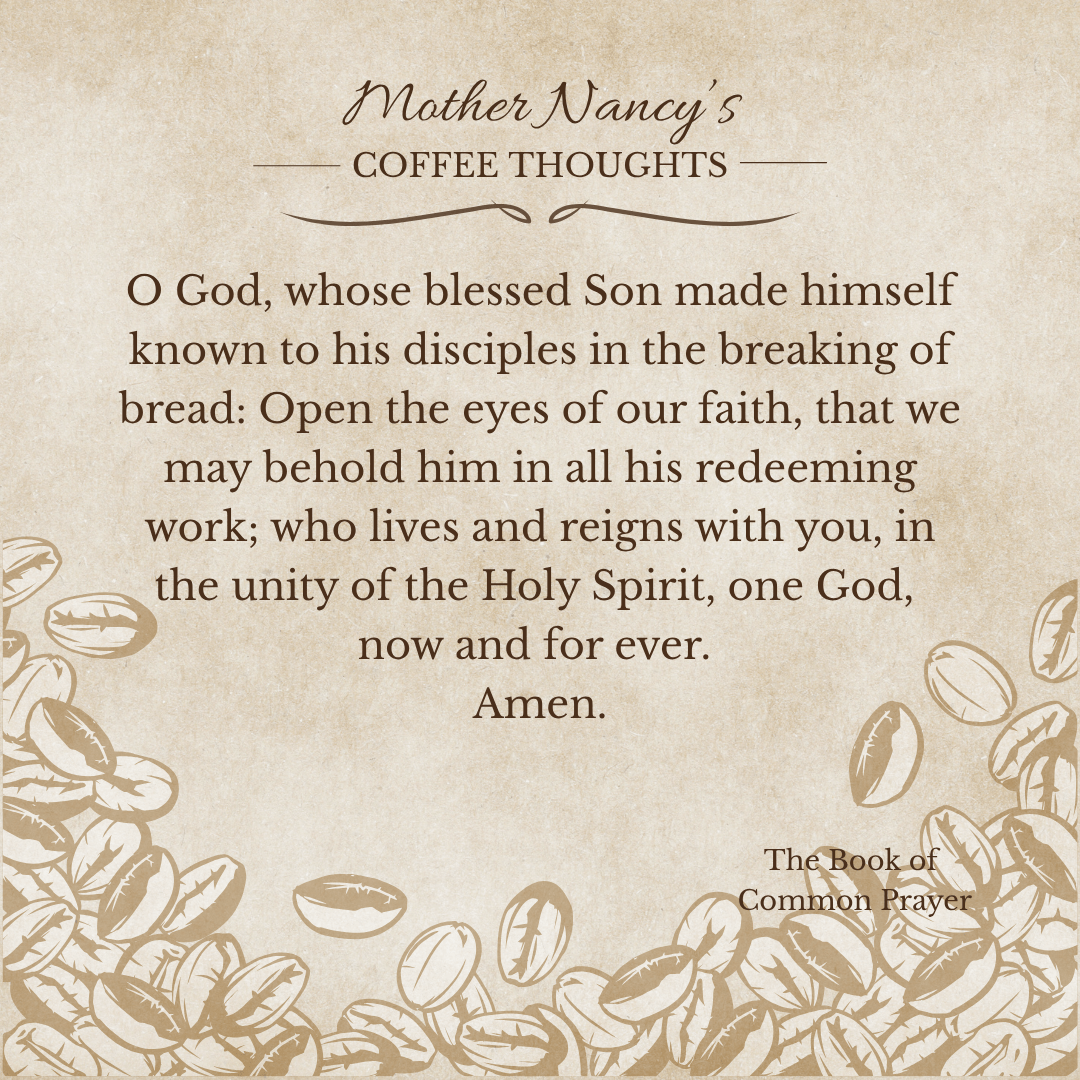
Cleopas and his companion were so blinded by their unfulfilled expectations that they walked away from their hope. Even as Jesus reminded them of the prophecies and teachings that bore witness to God’s plan, they still couldn’t see beyond their own expectations … until they sat down and shared a meal together and Jesus did what he had done with the disciples the last time he ate with them. At the table, he took the bread, blessed it, broke it, and gave it to them. Jesus reveals himself and Gods’ plan in the sacrament of the bread and wine. God’s plan isn’t brought about by weapons or threats or violence but by God giving God’s very life in the person of Jesus to show how Love conquers the evils in this world. Maybe not how we expect it to or in the timeframe or on the massive scale we expect it to but because of what God has done in the life death and resurrection of Jesus we live in the sure and certain hope that Love is the most powerful force in all of creation.
In every small act of hospitality and welcome and inclusion, in the giving of ourselves to others, in all the ways we share life together as the body of Christ in the kingdom-on-earth-as-in-heaven, we proclaim the Hope of God with us.
Not only at the table when we break, bless, and give the bread at the Eucharist but whenever and wherever we let others know we see them and welcome them into our lives. It can be as simple as a smile and kind word to the person behind the cash register. It is sharing our abundance with people who are bound by the societal systems that are designed to keep them in poverty. It is standing as ally with those whom society pushes to the margins. It is seeing the image of God in all people and treating them accordingly.
Do we expect Love to be the most powerful force in all of God’s creation? Because, if not, we have to ask ourselves where have we placed our hope. It isn’t easy, I know. Just as many of our faith ancestors grew weary or lost sight of God’s Plan, so do we. So many in this world offer us seemingly instant fixes – if we eliminate the enemy our lives will be so much better. But the problem with defining ourselves by the enemies we defeat, we have to keep making enemies to keep up our identity and eventually there’s no one left. When we place our hope in leaders who convince us the violent defeat of our enemies is the solution to all of our problems, we have lost our way.
And, yet, no matter how many times or how far we have wandered, God still pursues us, comes to us, invites us to follow The Way, to place our hope in God and learn to live Love. God is waiting to be at the table with us to give us God’s very life so that we can live the life we are made for, a life grounded in the hope of our redemptive, restorative, resurrection God. Amen.

