A sermon preached at St. Francis by the Lake Episcopal Church, Canyon Lake, Texas.
The Lectionary readings for the seventeenth Sunday after Pentecost are here.
If you were here last week, you may remember that we talked about learning to see forgiveness from God’s point of view, that “earning” and “deserving” are human constructs that we’ve attached to God’s unconditional love and gift of forgiveness.
The same holds true for the parable we are talking about today. Earning and deserving, and perhaps we need to throw in entitled, are not part of the economy of God’s Kingdom.
This parable about working in God’s Kingdom is bookended with Jesus saying that the first shall be last and the last shall be first, although we don’t read the first one because this is one of those moments when the after-market-add-on chapter and verse divisions can cause us to miss important connections in the original narrative. So, if you have a bible app on your phones, take a look at the end of Mathew chapter 19. I also encourage you to read all of chapter 19 of Matthew this coming week and get a full picture of what the lectionary skips over.
But, for, now I’ll just give you a quick synopsis. It’s been a while since I referenced my imaginary flannelgraph, but it share would be helpful today, so just imagine me moving the cutout Jesus, disciples, and other characters on a green flannel board.
Just prior to Jesus telling this parable of the workers, Jesus has spoken with a man who is looking for loopholes in God’s commandments. The man comes to Jesus and asks what good deed must he do to earn eternal life? Jesus paraphrases a bit but gives him the commandments that have to do with how we live with others in community: “Don’t murder. Don’t commit adultery. Don’t steal. Don’t give false testimony. Honor your father and mother, and love your neighbor as you love yourself.”
The man replies, “I’ve kept these. What do I still lack?” We tend to blow this man off as being petty and shallow but this question is deep. He sees the world through a work-and-reward lens and yet he feels a longing deep within that he doesn’t understand because his worldview isn’t filling up – can’t fill up – the God shaped space within him.
Jesus replies, “if you want to be complete, give up your worldview, your work/reward way of seeing everything and everyone, and follow me to learn how to love.” And as you may know, this story ends with the man walking away sad and Jesus saying that it is impossible to enter God’s Kingdom when we insist on hanging onto our human ideas of earning and deserving but when we let God show us how to see the world through God’s eyes, we discover we are in the Kingdom already.
In response to Jesus’ words, Peter, in a bit of panic I think, says to Jesus, “Look, we’ve left everything and followed you. What will we have?” And Jesus assures him hat there will be immeasurable benefits in choosing to follow Jesus into the Kingdom because in God’s Kingdom, everyone is equal. Our human labels of ‘first’ and ‘last’ aren’t reversed, they are done away with.
Which leads us into our story today – Jesus telling this story of workers and wages to help Peter and the others – and us – learn to see the world through the lens of God’s Kingdom. The life God intends for everyone is that we all receive the abundance of God’s grace, forgiveness, and love because the Kingdom of heaven is like a landowner who gives to everyone what they need to flourish in this life, regardless of what time they started work. We can’t earn nor do we deserve any ‘better’ position in the Kingdom on earth than anyone else, regardless of when we make the choice to follow Jesus.
The key point of the work and wages story is the question “are you envious because I am generous?” The original Greek is an idiom for being envious: “is your eye evil” because I am generous? The landowner is asking if we see the world through a lens of scarcity or abundance. Is there only enough for me or is there enough for everyone to flourish?
In God’s Kingdom, everyone gets paid the same – with unconditional love. And we are left asking ourselves if it enough for us, to be the same as others? Are we envious because God loves all the same? Do we feel entitled to be loved more or have more than others? Do we behave as Jonah, getting angry that God is gracious and merciful and generous with love?
OR are we grateful that God loves us? Are we grateful that God forgives us? Are we willing to let God’s equalizing Way of Love be enough?
Perhaps our Jonah style irritation or anger about what others have or what we don’t have is really because we misinterpret our feeling of lacking to be about material things when really it is about our willingness to see the world through God’s eyes.
In the economy of God’s kingdom, there is no waiting in line to “get what is ours”. As you’ve heard me say before – when Jesus says the first will be last and the last will be first, he isn’t reversing the order of things, he’s reordering, reorienting our way of thinking and seeing all together. Jesus is proclaiming the equity of God’s Kingdom. And this is very good news indeed.
The abundance of God’s love is already given us. Divine blessings are not rewards, blessings are freely given gifts. The kingdom economy is based on generosity and gratitude, not a human designed work/reward system. Having the eyes to see the abundance of the kingdom is how we live life worthy of the Good News of Jesus, accepting that we and everyone are worthy of God’s love solely because God loves us.
The point and purpose of all that we do in God’s Kingdom on earth as in heaven is to point to God, to reveal God’s love and generosity to those around us, to shine the image of God in each of us into the dark corners of this world so that others are reminded of the image of God in them. This is the life that Jesus shows us in flesh and blood.

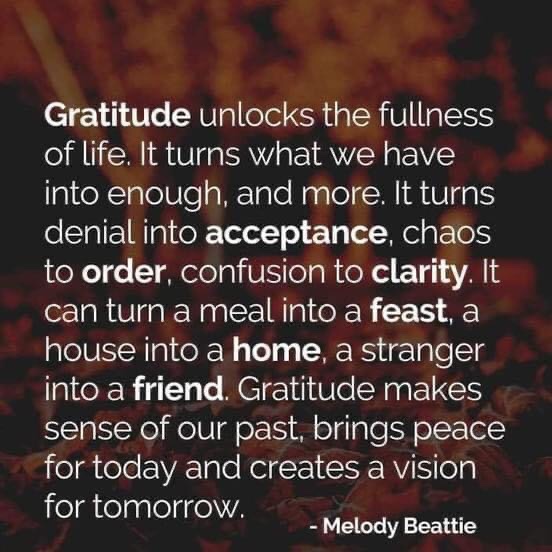
What would the world be like if we took the energy we expend trying to earn our way into God’s good graces or being irritated with others who either get what we want or have what we don’t and used our energy to express our gratitude for who God is and who and whose we are? Gratitude is the balm that comforts and heals our wounds – not some artificial or toxic positivity but a deep understanding and trust that God does provide all that we need to be who God created and calls us to be.
What we set our eyes on determines what we see. Look for glimpses of heaven-on-earth this week; the more you look, the more you’ll see the abundance of God’s Kingdom all around us. Amen.
 Mother Nancy's Coffee Thoughts