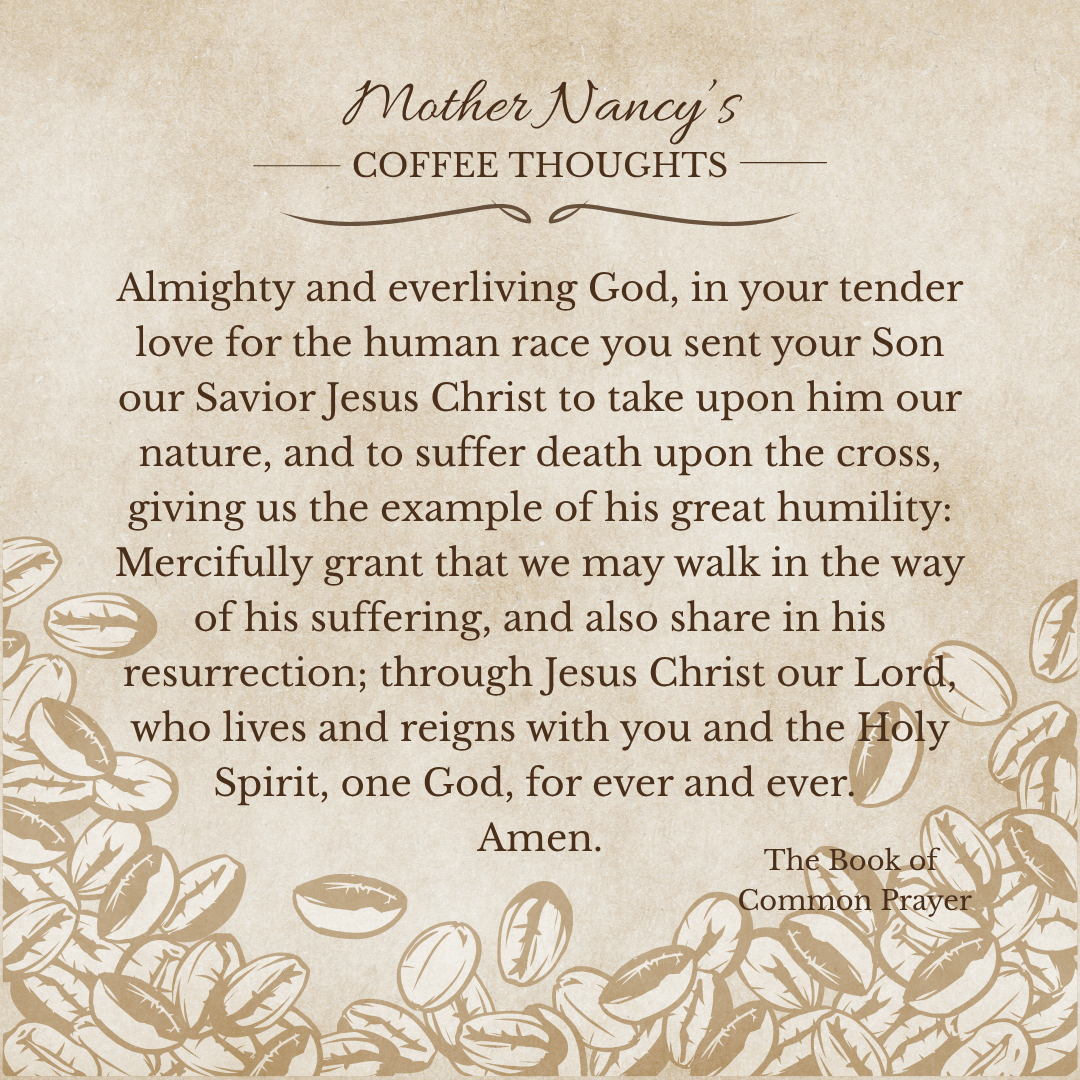
A reflection on the lectionary readings for Palm Sunday.
I was having a conversation this past week with some friends about Easter Sunday and we noted that the form of our worship on Easter is no different from every other Sunday. We may add more decor and bells and even incense but the service of Holy Eucharist is the same. What sets Easter Sunday apart is all that leads up to it, really beginning back on Ash Wednesday and the Season of Lent, to today, Palm Sunday, and especially the three days immediately before – Maundy Thursday, Good Friday, and Holy Saturday and the Great Easter Vigil.
We spend a lot of time preparing for this one particular Sunday to celebrate in much the same way as we do every Sunday. Every Sunday is a celebration of all that God has done for us in the life, death, and resurrection of Jesus. This is the foundation of our very lives as we follow Jesus, professing to be God’s beloved, God’s people.
Today, Palm Sunday is our entry into Holy Week. On this particular Sunday things are rather different than a typical Sunday. Many churches will begin outside of the worship space (even in falling snow as I had to do in Seminary!) and process in together with crosses made of palm fronds. We read two stories from the Gospels and two Psalms. Some churches do a dramatic reading of the second Gospel which includes a part of the crucifixion story.
It’s the first Gospel reading, though, that is truly Palm Sunday, the celebration of Jesus’ final entry into Jerusalem. We often call it a triumphal entry but we must remember this is God’s idea of triumph. Jesus was well aware that he was about to participate in a series of events (on top of all that he’d already done to upset the status quo) that would lead to his murder by the occupational government. It is believed that he enters the city not by the main gate but what is known as the Sheep Gate. He arrives on a donkey not in a royal procession on a war horse, to a crowd who honor him as a royal person singing hosanna, which means “save us,” a plea for deliverance not a celebratory shout. And it wouldn’t take very long for some in this crowd to change their tune.
One of the most profound aspects of Palm Sunday is the whiplash effect of reading this story and then by the time we get to the second Gospel story for the day, many of this same crowd have been stirred into another frenzy but this time calling for Jesus’ murder. This is intended to really make us look at ourselves and how we can lose sight of what we say we believe as we become distracted and drawn in by the noise of the world. Do we cry out to Jesus on Sunday and give our allegiance to a politician who tells us we should hate our neighbor on Monday?
So why, do you think, that the crowd did this abrupt about-face? Is it because Jesus didn’t come as they thought he should to rescue them from the oppression of the Roman occupiers? Is it because they couldn’t believe that salvation can come through love and humility? Is it because Jesus didn’t come with money and physical power or promises of an easy life? Why do we praise Jesus on Sunday and praise political leaders who not only think violence is the way to get what they want but glorify violence as the only way to maintain power over others? Do we believe that salvation can come through love? Do we trust that God’s plan for saving us is sufficient?
Regardless of what is happening around us, the truth of the Good News of God remains. God choses to offer us the salvation that comes through love, compassion, mercy, and justice. In the Garden of Gethsemane when the soldiers come to arrest Jesus and one of the disciples attempts to defend him with violence, Jesus stops him and says, “Do you think that I cannot appeal to my Father, and he will at once send me more than twelve legions of angels? But how then would the scriptures be fulfilled, which say it must happen in this way?” (Matthew 26:53-4) Violence in any form – verbal, physical, economical, spiritual – is not God’s plan or God’s Way. Do not let those who are trying through fear to convince us violence is the only way distract us from who and Whose we are, who we are made to be.
When we choose to live life guided by God’s Way of Love, we are living the life we are made for. We are freed from the false obligation of pleasing those in power, freed from finding our identity outside of ourselves because we are aware of the image of God within all people, freed from having to prove ourselves worthy of love and acceptance because God’s love for us is unconditional. When we choose to live life guided by God’s Way of Love, we don’t need to get caught up in whatever the crowd is chanting today in order to feel safe or like we belong because we know we belong to God. We stand against the hate that leads to violence by learning from Jesus how to love God, our neighbors, ourselves, and, yes, our enemies. This is God’s Way of salvation.
Today, Palm Sunday, is the only Sunday for which a special order of service is given in the Book of Common Prayer, followed by the liturgies for Maundy Thursday, Good Friday, Holy Saturday, and the Great Vigil of Easter, which takes place on Saturday Evening before Easter Sunday. Don’t skip ahead to next Sunday. Walk through Holy Week and witness God’s salvation through Love. Let our cries of Hosanna (save us) lead us through to Alleluia, trusting God and giving God our praises. May our love be louder than the hate.
 Mother Nancy's Coffee Thoughts