A sermon preached at St. Francis by the Lake Episcopal Church, Canyon Lake, TX.
The lectionary readings for the eighteenth Sunday after Pentecost are here.
In today’s reading we have the second time Jesus tells his disciples that he will be killed and rise again and again they do not understand.
Last week, Jesus and the disciples were in Caesarea Philippi and Jesus asked the disciples Who do you say that I am and began to teach them what being Messiah in God’s Kingdom is really about. Peter attempted to correct Jesus and Jesus reminded everyone who is supposed to be following whom.
In between last week’s reading and today’s Jesus continues to show the disciples what it is to be a citizen of God’s Kingdom on earth: we have the story of the Transfiguration in which Peter, James, and John witness Jesus having a conversation with Moses and Elijah and Jesus’ clothes are turned a dazzling white. And from this mountain top experience, Jesus leads them back into town where they encounter the rest of the disciples in a kerfuffle with some folks. A man had brought his son for healing and the disciples were unable to do it. After a brief conversation with the boy’s father, Jesus heals the boy.
Jesus then leads the disciples through Galilee to Capernaum and continues to teach them what being Messiah in God’s Kingdom is: “the Son of Man is to be betrayed into human hands and they will kill him and three days altering being killed, he will rise again.” This time, no one argues with Jesus but they still struggle with the reality of what Jesus is saying and they argue amongst themselves. We can’t fault them for this – what Jesus is telling them is difficult. He is their leader, the one they think will set them free from Roman Oppression. What he’s telling them doesn’t fit their world view. If we were in their place, it wouldn’t fit most of ours.
In our current political climate, we are in their place – arguing amongst ourselves about who is the greatest and struggling to understand how love and mercy are more powerful than our enemies.
Greatness in God’s Kingdom on Earth isn’t about who has the bigger sword or who gets the most votes. Greatness in God’s Kingdom on Earth is about loving God and each other well. Jesus says to be first you must serve others and he picks up a child and says whoever welcomes a child in my name welcomes me. Why a child?
We often read this as a reference to being innocent or teachable and that’s part of it, for sure, but to sharpen our focus on all that Jesus means, we need to remember that in first century Palestine, who you were and what you were allowed or forced to do had everything to do with your well defined social status based on your heritage and your wealth or lack thereof. Children were the lowest on the social status ladder, utterly dependent on others without being able to contribute much if anything to the good of the society. And yet, paradoxically, children are more valuable to a family, to a society, than anyone else. Jesus says how we see children is how we should see each other regardless of what someone may or may not contribute to what our society says is great or valuable.
We are to see everyone as beloved children of God and when we do, we aren’t turning the status ladder upside down, we are doing away with status and rank all together. In God’s Kingdom economy we are all equal. We are each uniquely a part of the greater whole in which we live in the understanding that we need God and each other to be fully human. What makes me most fully who God created me to be is that I work with all of you to ensure that everyone has what we need.
The God who created us and the entire universe chooses to bring about God’s Kingdom purposes with us, the very humans who regularly try to lead Jesus because we think our way is more efficient and effective. God chooses to save the world through vulnerability and love not domination. Genuine greatness in God’s Kingdom is generosity and love and faith.
And we have the choice to let God shape our worldview to be a Kingdom View of the world or to keep trying to prove that somehow electing the right person will solve all the world’s problems instead of continuing to create more of them.
All that Jesus did, all that the writers of the Good News Stories wrote down for us, shows us what it looks like in flesh and blood to live the Kingdom View in this world. The Kingdom View of the world is love, not domination, not coercion, not military or political might, not bullying or wealth or lies. A Kingdom view knows that Love is the most powerful force in all of creation.
In one of my podcasts this week, I heard the best definition of love in God’s Kingdom on earth I’ve ever heard: Love “is a commitment to action for the well-being of another, regardless of my personal feelings towards them.”* Listen to it again, Love “is a commitment to action for the well-being of another, regardless of my personal feelings toward them.”
Imagine a world we we truly and authentically seek the well-being of all of God’s beloved children, regardless of where they come from, regardless of their political leanings, regardless of their wealth or social status. Imagine a world where we see all people as God’s beloved children, invaluable and precious. Imagine a world where we all know our true identity as God’s beloved and all of our relationships flow from this knowledge of who and Whose we are.
When I begin to understand who I am created in God’s image, then who I am as daughter, sister, wife, mother, friend, colleague, and priest will flourish. I can let go of the need to be right and walk in God’s righteousness. I can let go of the need to compete and be a companion to all who walk with me. I can let go of the expectations and definitions of success that the world tries to sell me and grow in God’s wisdom.
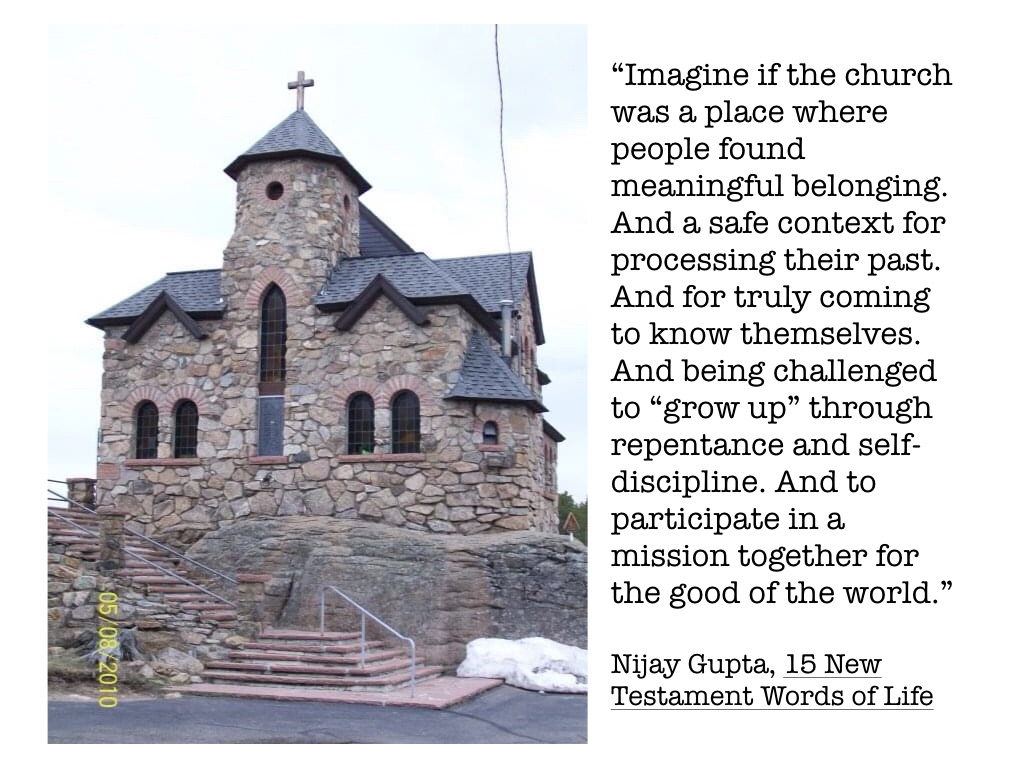
Only when we let go of our need to defend God’s Kingdom on Earth can we live in the peace of the Kingdom. Anger, defensiveness, hate, and greed only bring about more anger, defensiveness, hate, and greed. Love brings about peace and compassion and justice and mercy. We get to choose which we want more of by the way we see others – as our enemy or obstacle or the means to our own end, or as God’s beloved children. God’s Kingdom on earth is the reality we live in here and now as we follow Jesus in the Way of Love. Amen.
*From Voxology: 473 – Politics & Potlucks: The Church’s Place in American Culture, Sep 16, 2024
https://podcasts.apple.com/us/podcast/voxology/id1049250910?i=1000669694579
 Mother Nancy's Coffee Thoughts