A reflection on the readings for the Third Sunday in Lent.
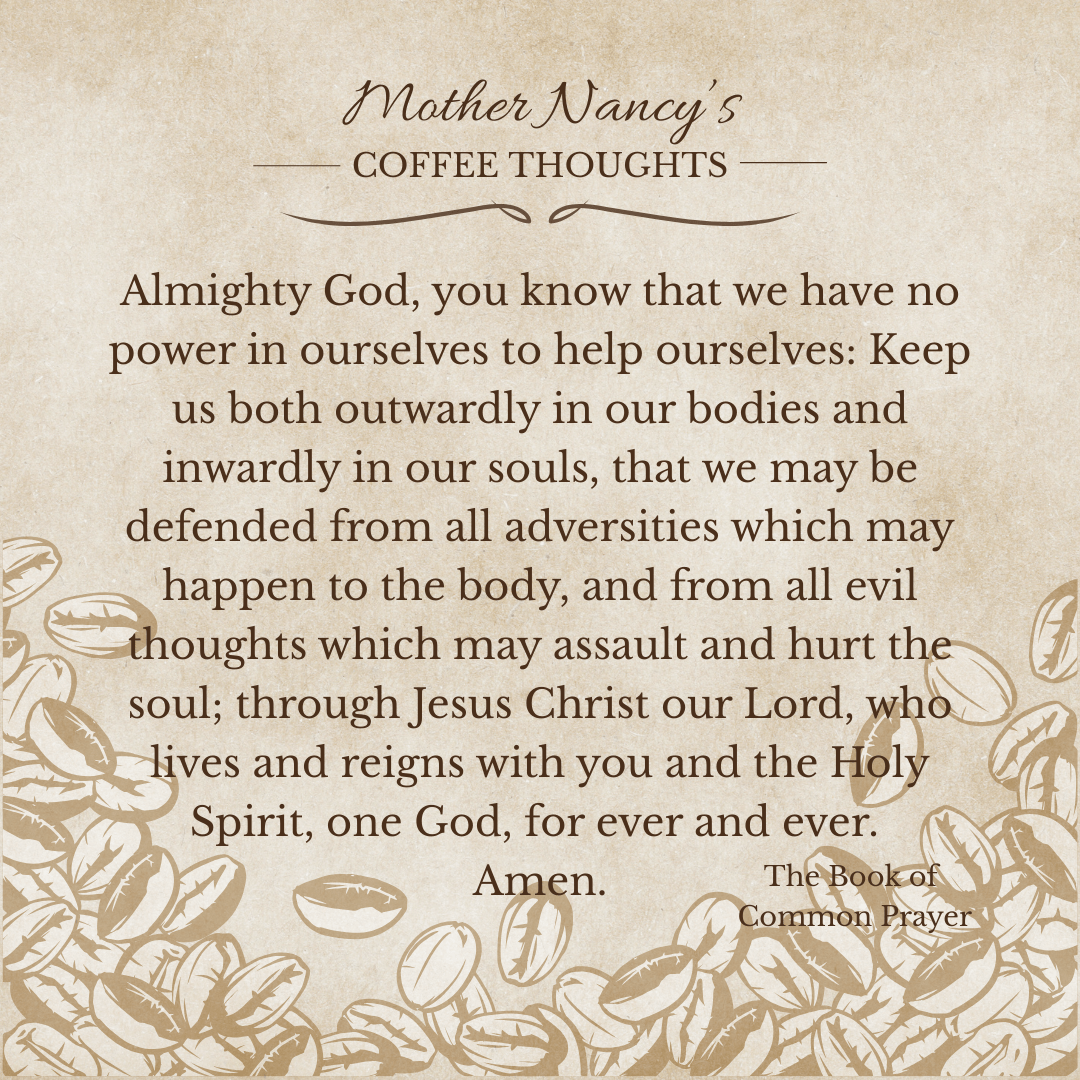
In the prayer provided with our readings today (in church-speak known as the ‘collect’ with the emphasis on the first syllable and is the gathering of all prayers into one) we ask God to protect us from the types of thoughts that can harm our soul. Hang onto that idea for a moment while we talk a bit about the gospel reading for today.
It’s a story that many are familiar with. Jesus, traveling through Samaria, encounters a woman getting water for her household. Jesus’ interaction with this woman illustrates how we bring the voices from our past or in our heads into our reading and hearing of scripture. I grew up with Jesus’ words being read with an accusatory voice “you have no husband” because women have been always defined by the relationships with men. Through my discipleship as an adult and in my spiritual growth I’ve learned to hear the whole context of the story in light of all of Jesus’ teachings, not with a voice of condemnation but one of compassion. After all, if you remember the gospel reading from last week, Jesus came not to condemn the world but to save it. All of it. Everyone.
I do wonder why the writer John doesn’t give her a name – it can’t be because he finds her insignificant or else he wouldn’t even bother to waste ink and parchment to tell the story as detailed as he does. Perhaps it’s to help us see how often we don’t see the whole person of someone right in front of us because they don’t meet our standards of what it is to be a person. Most women I know have ‘invisibility’ stories to tell where they weren’t seen and heard by others or given the dignity of their name.
This woman has come to the well mid-day, after the rest of the women had gotten water for their families; she wasn’t welcome in their group because of the relationship she had with a man. What we can’t forget here is women didn’t pick their relationships with men, the men chose for the women. Women had no status in society without the men, no chance for survival. She, as with the women who shunned her, is a pawn in the societies ruled by men. Jesus knows this and intentionally approaches her to reveal himself to this community through her. Not the men in power positions. Not the women who had ‘proper’ relationships. But the woman who had been rejected and cast aside over and over again; the woman that both cultures, Samaritan and Jew, told Jesus not to talk to. Jesus sought her out, invited her into a conversation, listened to her, saw her, heard her, knew and believed her story. He doesn’t condemn her. Jesus offers her a different kind of defining relationship, the one relationship that offers her dignity and compassion and unconditional love, a relationship with the God who is Love.
When the disciples join up with Jesus they question among themselves Jesus’ behavior – why is he talking with this woman, where did he get something to eat? Nothing is making sense to them because they can’t let go of the societal standards that often get conflated with our religious beliefs. Their idea of who was worth Jesus’ time and attention was set, and this woman did not meet their standards. They have been conditioned by the society they lived in to see some people as less than others. These are the thoughts that harm our souls.
Whenever we see others as anything but beloved children of God, we are causing harm to our souls. When we take it upon ourselves to decide who is deserving of God’s love, we have lost the plot of God’s intent for us and all whom God has made.
The disciples were seeing the situation through a competitive lens that comes with a scarcity mindset: there is only so much goodness to go around and I must claim it for myself and my tribe. We are most fully human when we understand the connectedness of humanity, the image of God within all human beings. God did not make us to compete but to be companions, tending to each other, loving each other as we love ourselves. Wounded souls aren’t able to love fully.
Jesus invites us all into a deep conversation that enables us to look inside of ourselves to see what we let nourish and sustain us. Are we letting the culture we live in inform how we live our faith or are we letting our trust in God’s love transform how we live in this world?
How has your soul been wounded by the hate, anger, and tribalism of our current culture? How have you let the wounds of your soul cloud the way you see others? Who do you treat as invisible?
These are difficult questions to ask of ourselves but we must if we want to be Peace Makers. I’ve been learning a lot about The Troubles of Northern Ireland (late 1960s – 1998)* and they use the term Peace Building. Peace is hard work and it takes a lot of tools and collaboration. Peace isn’t a destination but a journey we are on through the whole of our lives as we follow Jesus into the Kingdom-on-earth-as-in-heaven. The first step we take in peace building is to do the work with God’s help to uncover in ourselves our own wounded souls.
We are all God’s beloved, the best of us and the worst of us and every average one of us. This is the start of knowing our true identity. The best medicine for the wounds of our souls is God’s love. When we can know that we are beloved, we can see all people through the eyes of love. This is where peace building begins, this is how God heals and protects us. This is where we gather the tools to participate with God on this peace building journey. Amen.
*I highly recommend watching “The Guardians of the Flame”. Watch it with some folks you feel safe with and have a conversation about it. Ask the challenging questions and be honest and vulnerable with yourselves.
 Mother Nancy's Coffee Thoughts