
A sermon preached at Grace Episcopal Church, Cuero, Texas.
The lessons for the First Sunday after the Epiphany, The Baptism of Our Lord are here.
Do you remember your baptism? If you were baptized as a baby, most likely not. But do you know the story of it? Did your parents or Godparents ever tell you of that day? For those who were old enough to remember, do you ever really spend time pondering your baptism? Are you brave enough to ask yourselves questions like why did I decide to be baptized and what difference has it made?
Although seen as quite radical to those living in first century Palestine, John the Baptizer’s call to baptism wasn’t anything new. Those who converted to Judaism were washed in a pool of water to signify the washing away of their old life and entering their new life as a Jew. It wasn’t about membership but life – a new life lived every day according to the Ways of the God of Israel, grafted into the People of God. John preached a baptism of repentance but not in the way that our modern western minds may go. So often in our culture we conflate repentance with shame and guilt. But the Greek word we translate as repentance means a change of heart and mind, literally a turning around, changing direction.
What made John’s call to baptism so radical was that he didn’t call just those converting to judaism but the Jews themselves to this repentance baptism. This had never been done before. If they were born into God’s people and had lived in the framework of God’s commandments their whole life, what did they need to change, to turn away from? And what were they turning toward?
John was fulfilling who God called him to be: the one who prepares the way for others to have a personal encounter with the coming Messiah, as God promised he would come and set things in order. The Israelites had been living under political oppression for, well, for majority of the time since Abraham’s grandson Jacob fathered the twelve sons who would become the leaders of the twelve tribes. Being rescued by God was their birthright. The promise of the Messiah was their birthright. Their whole lives were about keeping the rules that set them apart as God’s people so why did they need to repent? What did they need to change?
John was telling them they needed a change of heart and mind, a reorientation of what it is to be God’s people. They needed to remember that living in God’s commands wasn’t a way to earn God’s love but a response to it.
John is quite surprised and a bit shocked, I’d imagine, that Jesus came to him to be baptized. John had been raised with the story of his conception and birth, the prophecy that he was to point the way to Jesus, his cousin. But when Jesus got in line with the folks who were answering the call to baptism, John said, “hold up, you don’t need to change direction. You ARE the compass for the rest of us. We should be coming to you.” And Jesus assures him it is the right thing to do.
Jesus is God with us as a human being, born a vulnerable baby and growing up in the culture of God’s people. He was the least likely to be in need of repentance or a change of heart or mind. And yet he submitted to John’s call so that he could begin his ministry of showing us in flesh and blood this new way of being God’s people.
Being God’s people isn’t just keeping a set of rules. Being God’s people is about being in an active, life-long, intentional relationship with the God who made us and calls us beloved. Jesus came to show us that keeping God’s commands is a response to God’s love for us, not a way to earn it.
Just like in John’s day, baptism is an ushering in of a new life here and now, living as Jesus shows us to live, guided by God’s love for all people. We are all born as God’s beloved, each with the image of God within us. The life we choose to live in response to our baptism reflects God’s love for us so that others know they are God’s beloved, too.
Following Jesus doesn’t set us above anyone but aligns us with all who have come before and who are walking this journey, too. Our baptism orients us toward God and the life we are made for. When we baptize our babies we are committing to raising up our children to live this life that Jesus has shown us how to live, a life in relationship with God, grounded in knowing that all people are made in God’s image, a life that participates with God in answering the prayer “your will be done on earth as in heaven.”
John the Baptizer’s call to a baptism of repentance is a call to life in God’s Kingdom here and now, on earth as in heaven. We follow Jesus in the life that offers a loving invitation to everyone we encounter. John calls us and Jesus shows us what it is to proclaim by word and example the Good News of God in Christ, to seek and serve Christ in all persons, loving your neighbor as yourself and to strive for justice and peace among all people, respecting the dignity of every human being.
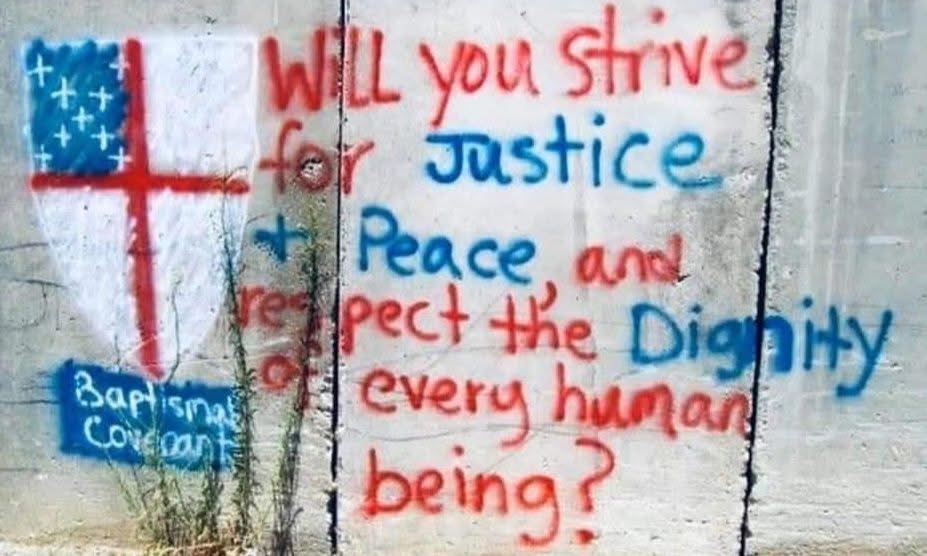
The promises we make at baptism are our loving response to the God who loved us before our baptism and loves us still. Our baptism does so much more than make us members of the church. Our baptism grafts us into God’s people, joint heirs of the Kingdom that operates with an economy of love and justice and mercy. Living a baptized life, a life oriented toward God, following Jesus in the Way of Love is the life we are made for.
So, whether or not you can recall the story of your baptism, know that it is a story of love, God’s love for you and hear God say “you are my beloved.” Amen.
 Mother Nancy's Coffee Thoughts