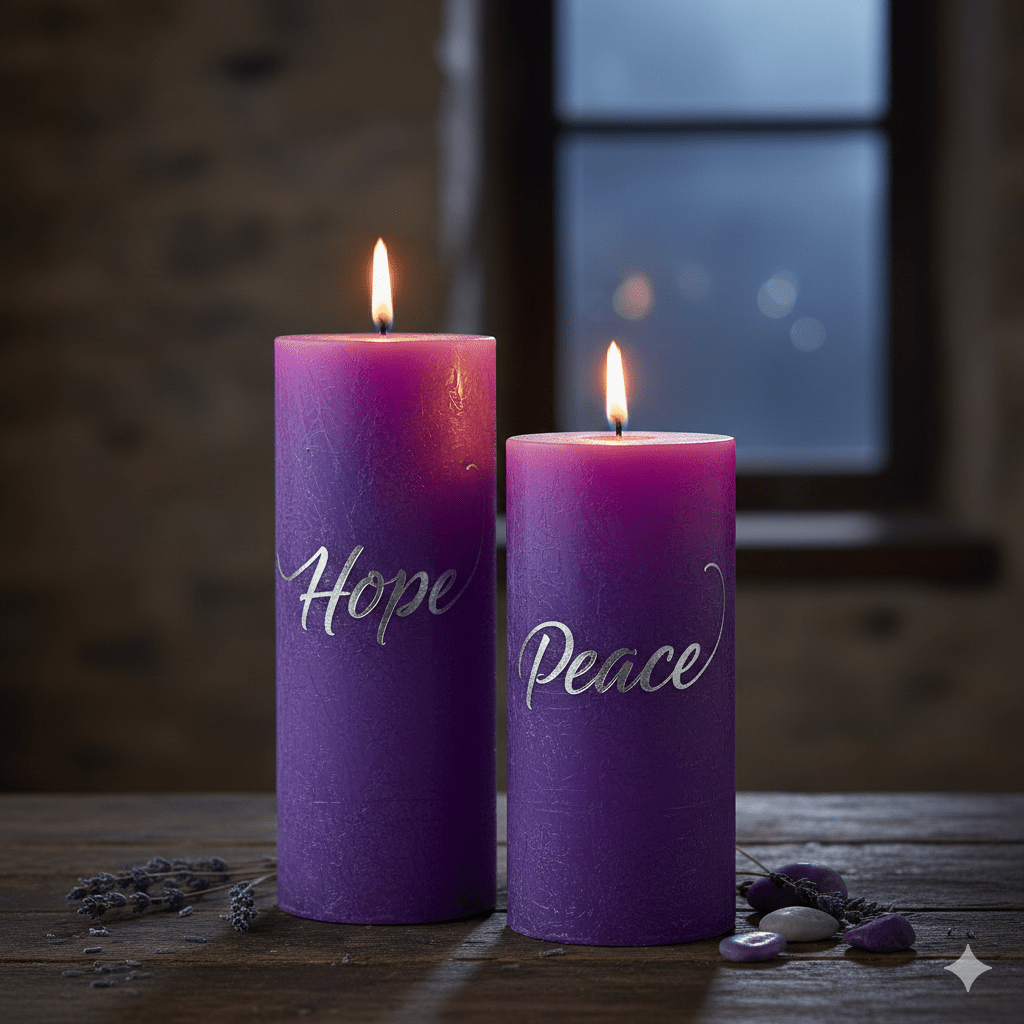
A reflection on the lectionary readings for the Second Sunday of Advent.
The word for this Second Sunday in Advent is Peace. When I watch the news, Peace feels elusive these days. Our political scene in the U.S. has devolved into a continuous playground battle for superiority and most of what I see is people attempting to feel superior by yelling louder insults in an attempt to dehumanize large groups of people. If we have to step on others to elevate ourselves, we are not making peace. Domination, whether it is with insults and verbal violence or physical violence and force, is artificial peacekeeping because life for the one who’s insulted and oppressed has no peace at all.
Jesus says blessed are the Peace Makers and all of our lessons for today describe what the Peace Making Kingdom-on-earth-as-in-heaven is like. The prophet Isaiah offers a poem of the peaceable Kingdom in which all violence is ended as God restores all of creation. But don’t take it literally, because that lets us humans off the hook if we can make ourselves believe that a restored creation is only about how the animals behave. Isaiah isn’t saying that God is going to change the digestive systems of the animals. It is the proper order of God’s creation for wolves to prey on lambs.
I remember when I was a child, my family would watch Mutual of Omaha’s Wild Kingdom every Sunday. When we would be upset at the lions eating the gazelles, Dad would explain to us that the lion isn’t being mean, the lion is being a lion and that God made the lion to hunt and made the gazelle to be an important part of the food chain that kept creation going. Gazelles and lions and wolves and lambs and leopards and goats only know how to be what God made them to be. They live in the interdependence of God’s creation. It wasn’t the animals that made the choice to decide for themselves what is good and what is evil.
Prophets, like Jesus, often told parables or stories to illustrate the hard point they were making. The scenes Isaiah describes upend our ideas of this world. These scenes are meant to make us rethink how we see the world around us and ask hard questions of ourselves. Has human violence against other humans become as normal as a wolf hunting a lamb? Has human fear of other humans become as normal as a calf running from a lion?
Human violence and human fear are not part of God’s well ordered, interdependent creation. These are human ideas built from the broken desire to dominate others. And when we attempt to dehumanize others, we are also dehumanizing ourselves. And, I won’t even say we become animals because that would insult the animals.
So, what about the gospel story for today? Why are we reading about John the Baptizer calling others names if we are supposed to be imagining the Peaceable Kingdom of God? What do peacemaking and repentance have to do with each other? Everything. Repentance is a change of mind, a turning from one way to another. John the Baptizer baptized those who wanted to live a new way, the way of God. And this new way is a life of peacemaking. In this new way the King will judge the poor with righteousness and decide with equity for the meek of the earth. Children will be safe from harm and everyone will know God. All of creation will be restored to God’s original intent.
The Pharisees and Sadducees were coming to be baptized but John questioned their motivations. John needed to disrupt their way of thinking, to upend their worldview, just as Isaiah was trying to do with his poem. John just chose to be more direct and less poetic than Isaiah. John wanted them to face some hard questions about themselves. Did they really want to give up the power they had over others? Or where they hoping that John’s call for repentance would be yet another way they could control others through shame and fear? Did they want to have their own relationship with God or continue to ride the coattails of their ancestors? It wasn’t Abraham’s righteousness that earned him God’s choosing. God had spoken to Abram and Abram had done as God asked. God credited Abram with righteousness because Abram believed what God promised and did what God asked of him. The Pharisees and Sadducees felt entitled to the fruit of God’s kingdom rather than being willing to bear good fruit for the good of the Kingdom.
The fruit worthy of repentance is the fruit we bear when we seek to be the humans God made us to be: interdependent on each other and God as we work to build up others not tear them down. To bear the fruit of the Kingdom we have to let go of all that keeps us from being who and Whose we are made to be. We have to let God clear us of our chaff. Every wheat grain is encased in chaff, but for the wheat to do what wheat is made to do, the chaff must be removed.
Peacemaking means disrupting the artificial peacekeeping status quo, it means we have to change our worldview to a Kingdom view. Peace making seeks out injustice and strives to remake the systems that mistreat or oppress people. Peace making works toward equity, mutuality, and justice for everyone. Peace making begins with the knowledge that all people are created in the image of our Loving God and that all people are beloved children of God. Peace making enables everyone to be fully human.
The prophets of God spoke in ways that enabled others to change their hearts and minds, to repent. Isaiah’s and John the Baptizer’s message is as poignant today as when they spoke aloud. When we make the choice to not let violence, whether verbal or physical, become normalized, our peace making efforts from prayer to protests will help some to change their hearts and minds. No effort is too small to participate with God in the building up of the peaceable kingdom. Peace Making isn’t a one time endeavor but a life of following Jesus.
May the God of hope fill you with all joy and peace in believing, so that you may abound in hope by the power of the Holy Spirit.
 Mother Nancy's Coffee Thoughts