A sermon preached at Grace Episcopal Church, Cuero, TX.
The lectionary readings for the twenty-second Sunday after Pentecost are here.
Good morning! It’s so nice to be back with y’all today. Are you ready for another “I knew Peter when” story? Way back in 2014, I led a group of folks on a retreat to Holy Cross Monastery in New York. This monastery is home to a group of Episcopal monks who spend their days in prayer and worship, lead spiritual retreats, and host guests in their guesthouse. It’s an amazing place where you experience life grounded in the presence of God with us and framed in prayer. The trip played a role in Peter’s discernment to the priesthood. It’s his story to tell so I’ll let y’all ask him about the details if you choose, I’ll just use it as a reference point to ask this question: were you aware there was such a thing as religious orders, groups of men and women living in community with each other in the ancient rhythms of prayer and worship and hospitality, in the Episcopal Church?
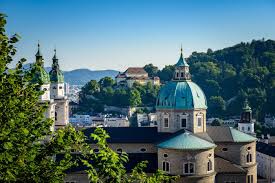
We don’t hear much of religious orders nowadays but they are real and I want to share a story of some modern day nuns in Austria. This small group of three, each in their 80s, have made the news because they recently fled the nursing home they were moved to against their will and moved back into the convent they had lived all of their adult lives. In doing so, their community has surrounded them in support and love and the attendance at mass in their chapel is increasing every week. So, with the overall decline worldwide in church attendance, you’d think those ‘in charge’ would be pleased . But they are not. Because these strong, resilient women broke rank of church hierarchy and followed what they believe to be God’s call for them. And people are responding positively to their devotion to God, even as the church authorities are nursing bruised egos. Not unlike the story in our gospel reading this morning.
Jesus is confronted by a group of Sadducees who are feeling threatened by the popularity of his good news message. The Sadducees, part of the temple leadership, approach Jesus with a question they think will cause him to look foolish to the crowds. They didn’t believe in any form of resurrection and that death was it. When you died, they believed, you ceased to exist which adds weight to the importance of having children as this is what kept your legacy alive. They also believed that only the five Books of Moses held scriptural authority and that none of these books teach about resurrection. So their question wasn’t to clarify doctrine or understanding, it was to catch Jesus in an impossible situation.
What they bring up is known as Levirate marriage, a law that says if a married man dies without any children, his brother must take his widow in marriage. The official intent of this law was to ensure the woman was cared for in her later years by her husband’s family as well as ensuring the continued legacy of the husband, but the real effect was to treat her as property without any agency in her own life.
Jesus, as he so often does, turns their scenario back on them. He knows they don’t really want an answer, they just want to discredit him. Jesus takes God’s words to Moses from the burning bush to say that God is a God of the living or else why would God have described himself to Moses as he does? God said “I AM the God of Abraham, Isaac, and Jacob, not I WAS. God speaks in the present tense. How could this be possible if these ancestors were not somehow alive after their physical death?
Jesus undoes their original assumption that current cultural norms will also persist after death. Jesus makes it clear that regardless of our understanding of who others are or their place in our culture, in the New Heaven and New Earth of God’s Kingdom we will live into the core of our identity as Children of God. We will be part of a new age in which the cultural norms will be of God’s Kingdom, not earthly kingdoms.
This was very good news to someone like the widow in the Sadducees scenario. In the economy of God’s Kingdom, her value and worth aren’t dependent on her relationship with anyone but God. And even better news is we don’t have to wait until death to claim our identity as God’s beloved children. Jesus tells us that God’s Kingdom is already with us and we are to live accordingly.
It is with this understanding that we live in the answer to the prayer that Jesus gives us as we ask that God’s will be done on earth as in heaven. God is the God of the living, of our lives here and now AND of our lives after this one. Jesus doesn’t give us much more than this story about what the next life will be like but he does give us much about what this life, here and now, can look like.
Our faith is a living faith that is to guide all that we think, say, and do so that we both reveal the image of God within us and see the image of God in others. To go back to the story of the three nuns in Austria, their superiors are behaving much like the Sadducees in the Gospel lesson: they want these women to conform to the cultural norms that say they are too old to live and work in the convent that is their home and in doing so the church leaders are losing sight of the good that their presence in the community is doing, revealing that God is a Living God and the God of the Living.
And so we need to regularly be willing to ask ourselves where do we try to force fit the Kingdom of God into our cultural norms instead of letting the Holy Spirit guide us in the Kingdom-on-earth-as-in-heaven? What are our own undiscovered biases that prevent us from seeing others as children of God here and now? Are we willing to stand against our own cultural norms that are contrary to God’s Kingdom?
All people are invaluable to God. We each have agency and freewill to live our lives in response to God’s love or not. Jesus’ invitation to follow him into the Kingdom here and now is very good news indeed. We are resurrection people. We have the choice to live in the freedom afforded us with our identity as God’s beloved, citizens and heirs of God’s Kingdom here and now grounded in the sure and certain hope that God will set all to rights when the New Heaven and New Earth come to be.
Together, we are all called to follow Jesus into the Kingdom, continuously formed into who God calls us to be, whatever age we are, wherever we live. The prayers of those called to live their lives in religious orders are for all of us, for the conditions of the world so that we, too, live in the ever growing awareness of God’s presence with us here and now as we shine the light of God’s love for all in our own community. Amen.
 Mother Nancy's Coffee Thoughts