A sermon preached at St. Francis by the Lake Episcopal Church in Canyon Lake, TX.
The readings for the fourth Sunday after Pentecost are here.
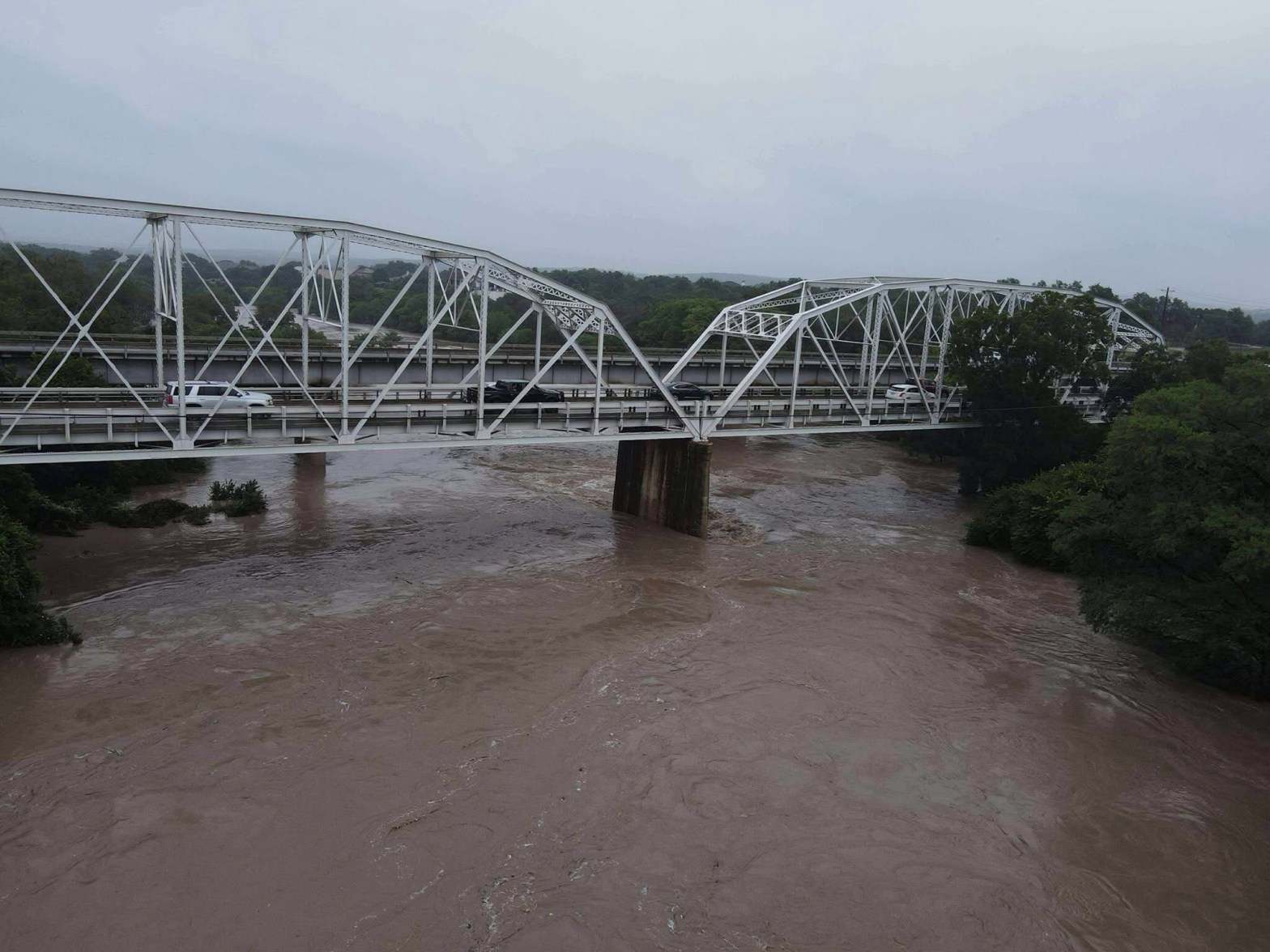
It’s been a rough couple of days – our 4th of July festivities were tempered by the devastating floods in Kerrville with 43+ lives lost followed by the anxiety of knowing the raging Guadalupe would continue to cause damage as it made it’s way to the Lake. And as the rain continued to fall yesterday, our own community was under threat of devastation. As desperate as we’ve all been for water in the lake, it just doesn’t feel right to be happy about it when it comes with pain and sorrow in it’s path.
Life is complicated. It’s a mix of joy and pain and it’s uncomfortable to hold this mix of emotion and yet that’s part of being human, isn’t it. Our hearts ache with those who are still waiting and searching for loved ones. We want to jump in and help in some way but right now the best and most necessary thing we can do is pray. To quote our bishops in their joint letter to the diocese yesterday, “Prayer is not sitting by passively and doing nothing. Prayer is hope in action. It moves mountains and tunes our hearts to the heart of Jesus. Pray big prayers for the missing. Pray big prayers for their families and friends. Pray big prayers for first responders and rescue workers. Pray big prayers for St. Peter’s Church, Kerrville and the Hill Country camping community.” And I’ll add pray big prayers for those north of us in Travis county. Pray big prayers for our own community and those impacted by the flash flooding along River Road and Rebecca Creek Road. “Pray big prayers not just one day or one Sunday, but for the next 30 days” and beyond as we know the recovery efforts will go on for months.
There is no better way to explore just how complicated life can be than with the stories and letters we read each week from our faith ancestors as they experienced and were shaped by the God of creation. Who better to show us how to navigate this life than the One who made us, the One who chose to become one of us and knows us better than we want to know ourselves. When Jesus gave us the greatest commandment to love God with our whole being and to love our neighbor as ourselves, he gave us the lens through which we are to see life.
There are so many layers to explore in today’s Gospel reading. It was a challenge to narrow down what we can look at in these few minutes together, and even more difficult as the events of the past two days had me relook at what I needed to say. This passage follows immediately after Jesus saying “anyone who puts his hand to the plow and looks back isn’t fit for God’s Kingdom.” Today’s section of the text actually begins with “after these things” Jesus appointed seventy others. ‘Others’ being in addition to the twelve Jesus had already commissioned to go ahead to prepare the way for him as he makes his way to Jerusalem. Jesus sent them out in pairs, not to be individual heroes, not to be in competition with each other but to do life with each other as Jesus had taught them to do life with God. He sent them out to be like lambs among the wolves. He warns them of the wolves in the world, those who prey on the vulnerable, and he cautions them against behaving like the wolves.
He sent them to proclaim peace, God’s peace, peace that is so much more than just an absence of conflict but the kind of peace that comes from knowing to whom we belong, the kind of peace that comes when we see our fellow humans as companions not competitors. The kind of peace that knows that every human being is intrinsically valuable because they are created by God. The kind of peace that gives us the strength and courage to deal with the tragedies and complexities of this life.
This peace that God gives us isn’t a limited commodity but an abundant resource that grows as we offer it to others. This peace isn’t forced or coerced or found by lording power over others. This peace comes with finding our identity in God, as God’s beloved, living in the economy of God’s Kingdom-on-earth-as-in-heaven. An economy in which love and compassion and empathy increase the more we give them away.
And when we encounter those who want to live life as a competition, who don’t want to live peaceably, we aren’t to join them but stand confidently in the knowledge of God’s love for all people, continuing to proclaim the Kingdom of God is right here with us. The dust that we are to wipe off is the inclination to villainize those we disagree with, the inclination to fight against others rather than walk with them. When we join in the competition to be better than others, we become the wolves not the lambs.
When these seventy come back delighted by what God had equipped them to do for others, Jesus cautions them to not let it go to their heads, to not let it enlarge their egos but to remember who and Whose they are and the reason for going to begin with.
If I didn’t know that Paul’s letters were written before the gospels I’d think that Paul was preaching to the Galatians on our passage from Luke. The common thread between the two is how we are to walk through life together as we live in this now and not yet Kingdom-on-earth-as-in-heaven.
Paul tells the Galatians that we are to bear one another’s burdens and that we each carry our own loads. Our load is our regular, ordinary obligations as we continuously grow into who God calls us to be. Carrying our loads isn’t a competition where we have to convince others ours is better or theirs means less than ours. Our loads are our loads and everyone has one. Burdens are when our loads become too much for us, either extra is added on, or we for some reason just can’t carry what we once did. We all have burdens and we all need help with them. No one is better or worse because of the burdens; we are all human with them. As we journey through this life together, we work for the good of all, sharing the peace and love of God in the new creation, aware than not all who claim to be of God truly are, some are wolves wearing an ill fitting sheep skin. We are to discern the good to do through the lens of the great commandment: loving God with our whole being and loving our neighbor as ourselves.
As the full impact of the weather events of these past two days come to light, many will need help with burdens because their ordinary loads have been upended. And as we come together to help each other and our hill country neighbors, I pray we are shaped and transformed to better see others as companions along the way.
Life is a complicated mix of joy and pain and we need each other to navigate our way in the Kingdom working for peace and the good of all. Jesus shows us that this is how we live most fully as the humans God created and calls us to be. Amen.
 Mother Nancy's Coffee Thoughts