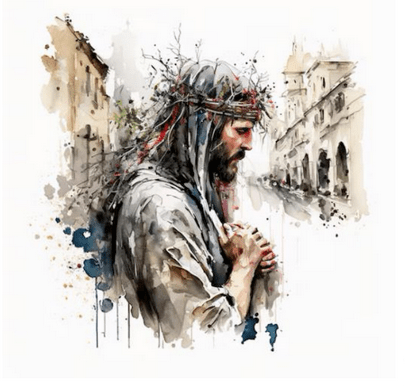
A sermon preached at St. Francis by the Lake Episcopal Church, Canyon Lake, Texas.
The lectionary readings for Christ the King Sunday are here.
The seven-year-old-fairy-tale-believing little girl in me has always been enamored with the British Royal family. So, I must admit that in my time in Canada, I enjoyed participating in the royal customs and traditions of a country in the Commonwealth, well except for a particular pub game called Save the Queen (I guess it’s Save the King now). In this game, your supposed friends would plunk a coin in your beverage and, because the image of the queen was on the coin, you had to chug what was left of your beverage to save her from drowning while everyone else sang “God save the Queen”. I made the mistake once of trying to get out of chugging a full pint by saying, “she’s not my queen” and was booed and threatened with expulsion from the pub. Both in the pub and in my classes, I learned a lot about how serious they take their allegiance to the Monarch while remaining faithful to our confession that Jesus is Lord of Lords and King of Kings.
Since much of our identity as Americans stems from the fact that we booted the Monarchy out of our country so very long ago, we struggle to fully grasp the concept of pledging allegiance and loyalty to a King or Queen and especially how our faith in Jesus as King of Kings informs our allegiance to any leader. Our form of government in this country came about because we wanted out from under the total authority of a monarchy. And to be clear, Great Britain is not a true monarchy as their monarchs no longer have any executive or political power. The role of the monarch, in Great Britain and the Commonwealth at least, is a symbol of a unifying national identity, not political power.
As we talk about the Kingship of Jesus, we have to be careful in our understanding and the words we use. We have to understand it through the stories of our faith ancestors in the Old Testament and with the words and actions of Jesus in Roman occupied, first century Palestine.
On Christ the King Sunday we close out the church year with the story of Jesus’ condemnation by the powers of this world before we turn our attention to preparing for God to step into history as a vulnerable baby. We can’t separate these events because they paint the full picture of what God is up to in this world.
God chose to step into history not in privileged wealth or status or power, not with physical force or military might but as the most vulnerable among us to show us how powerful love really is. And God chose to give himself over to the oppressive authorities to be executed to show that love as God loves is more powerful than any oppressive governmental system and even more powerful than our greatest human fear, death.
When we claim to follow Jesus, our ideas of leadership, regardless of the century we may be in, should reflect God’s Way and God’s Kingdom, not the world’s way. Jesus refused to be made King by humans and said that his kingdom is NOT of this world. We cannot label our human derived, might-makes-right driven governments with Jesus’ name. Putting a label of “Jesus” or “God” on hatred, bigotry, oppression, or fear, does not make it God’s Way. This is using God’s name in vain; it is our modern idolatry.
When God agreed to give the Israelites a King, it wasn’t a reward, it was a concession. God said to the Israelites, “I will be your God and you will be my people” and the Israelites said they’d rather be like all the other nations. So, God let them have their way, giving them over to the consequences that would come from choosing to be like other earthly kingdoms rather than living as God’s people on earth as in heaven. And then God appointed prophets to hold the Kings accountable for being the leader of God’s chosen people, because God’s anointed are to rule with justice, mercy, and grace while walking humbly with God, to serve as a role model of the image bearers we are created to be.
And many thousands of years later, we haven’t done any better. When we choose to follow our own way instead of following Jesus, God lets us. And there are consequences. When we choose to lead or rule by fear and oppression or follow a leader who does, we can never feel the security and safety we pretend we are offering others.
Regardless of who our leaders and elected officials might be, when we make the choice to follow Jesus, Jesus becomes our primary teacher and guide, our Lord of Lord and King of Kings, the one who shows us in flesh and blood what it is to love as God loves, even when it’s hard. Even when it costs us everything. Even when the world promises us riches in exchange for our true identity. Even when the world says Jesus’ Way is weak and out of date.
The throne room imagery we have in our readings today is the majesty of God on the throne, not any human and the one like a human is Jesus who has the title Son of Man, the one who can rule without letting the power corrupt his motivation.
So, like Pilate, we have to ask ourselves, what is truth? Do we claim the world’s truth that says power is physical and military might that bullies others to conform to our will, that constantly defines “us” as against “them” and that seeks revenge and retaliation in the place of justice?
Or do we claim the truth of Jesus, that the power of God’s Kingdom is the love, mercy, and justice that both enables and requires us to see the image of God in all people.
Next Sunday we step into the season of Advent, the time in which we prepare for the coming of Jesus not just as a baby at Christmas or to restore all things to God’s original intent in some future time, but in this now and not yet season of our everyday lives. How do we expect Jesus to show up every day? As a bully to vanquish those who disagree with us, as a dictator demanding perfect loyalty, as a self-serving master who sucks the life from us, or as a humble servant teacher who says the greatest commandment is to Love, offering us and everyone peace and grace and mercy and the renewed life we are created for?
There is much anger and hate in this world and it is very, very loud. Jesus shows us in flesh and blood that Love is more powerful than anything else and yet we tend to whisper love. We need to shout LOVE from the rooftops, make our love actions louder and more visible so that the world knows the Good News of God’s Love. This is how we remain faithful to our King of Kings Jesus.
Jesus is the one who unifies us in our identity as God’s beloved and we are to show the world the power of Love not because we believe in some fairy tale but because we stand in the truth of who God is and Whose we are: God’s beloved children, created in the image of the loving, life-giving, liberating God of all Creation, regardless of what country or century we live in. We are citizens of God’s Kingdom-not-of-this-world and it is God’s will that through the life, death, and resurrection of Jesus and with our works of love and mercy and justice as we follow him, all of creation will be restored to God’s original intent.
As folks who know we are God’s beloved, we must show the world that everyone is God’s beloved, because so many in the world have forgotten it. If you’ve forgotten that God loves you, let me remind you, let our time of worship and sacrament today remind you, so that knowing you are loved you can shout love loudly with all of your heart, soul, mind, and strength. If it’s not about love, it’s not about God. Amen.
 Mother Nancy's Coffee Thoughts