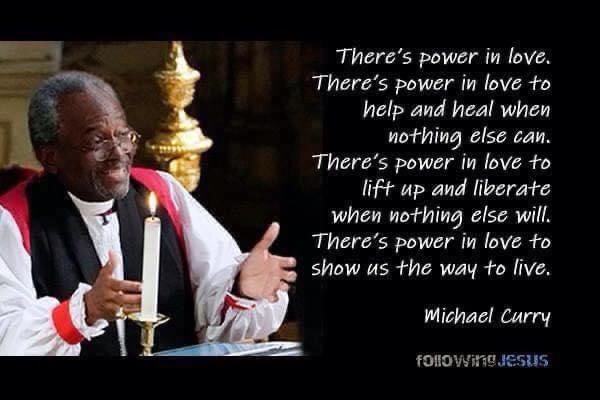
A sermon preached at St. Francis by the Lake Episcopal Church. The Lectionary readings for the seventeenth Sunday after Pentecost are here.
When I started working on the sermon for today, I struggled to choose whether to talk about James’ words that not many should become teachers because teachers are held to higher standards or Jesus’ words to Peter, “get behind me Satan.” Neither on the surface sound like feel-good topics about the God of Love, do they? In fact, when Jim asked me what I would be preaching about and I described to him which lessons were being read, he said, “that doesn’t sound like loving relationships at all.” So, let’s see what we can uncover as we dig into them both.
What we call the book of James is written by Jesus’ half-brother Jacob about 30 years or so after Jesus resurrection and ascension. Jacob was a leader in the Jerusalem church and he writes to the Jews living outside of Jerusalem to teach and encourage them to live in the wisdom of Jesus’ summary of the Torah: loving God and their neighbors as Jesus showed them in flesh and blood. Jacob knew the weight his words would carry; he accepted the accountability that came with being a leader in the early church. He teaches the wisdom that the words we use can either build up or destroy, bless or curse and so we must always work with God’s help at controlling our words. His metaphors leave us with the question: if our words are causing harm, can we really claim to be following Jesus? Jacob believed that Jesus came to build up the Kingdom of God by teaching that love is action guided by God’s justice and generosity. And he prompts us to ask if we truly believe it, too.
With (Jacob)James’ guiding wisdom of what it means to teach the Good News ringing in our ears, we step into Mark’s narrative of Jesus and Peter in one of their better known exchanges. Mark would have penned his telling of the Good News around the same time that Jacob’s writing was circulating among the early Christian communities. I have no idea who’s came first or if they ever read each other’s writings but I do applaud the lectionary folks who paired these pieces together for us today.
Jesus, the teacher, the radical Jewish Rabbi, asks his disciples who others say that he is, followed by the question, “who do you say that I am?” And Peter answers confidently, “you are the Messiah.” And then Jesus does this curious thing and sternly orders them not to tell anyone. Why on earth would he do that? Because he knew they weren’t ready to be teachers yet, they only have the beginning of the wisdom Jesus is leading them toward. They can speak the words, “you are the Messiah” but they aren’t yet ready to live these words.
And so Jesus continues the lesson to counter Peter’s idea of what the Messiah is to be. Messiah is an ancient title that means anointed one and and carried royal implications. The long awaited Messiah was to come and deliver God’s people from the oppressive nature of the Caesars of the world. And of course this meant big armies and lots of weapons and military and political power bigger and more dangerous than Caesar’s, right?
Wrong. Jesus says that the Messiah will suffer, he won’t rise to political or military power but will actually be killed by the powers he’s come to save God’s people from. And the zinger of the lesson is that the Messiah, after being killed, will rise again, that death won’t be the end but only the beginning of the new life the Messiah is bringing to the world!
But Peter is so discombobulated by the idea of the Messiah being killed that he doesn’t seem to hear the conclusion of the lesson. He stopped listening when Jesus’ teaching went against his own ideas of what the Messiah would do. And so Peter tries to take things into his own hands, making himself the teacher of Jesus to correct Jesus. Imagine the audacity?!
Jesus isn’t gentle in his correction of Peter, there’s too much at stake here, it’s ‘life-and-death’ serious – like teaching our children not to run into traffic serious. And where Peter speaks to Jesus privately, Jesus scolds Peter in front of all of the disciples and then calls in the crowds so as many as possible can hear. This isn’t private information to be hoarded by a select few, but wisdom for the life of the whole world.
And yet, Jesus doesn’t condemn Peter or expel him from Jesus University. Peter, in all of his humanness, sometimes gets it right and sometimes gets it wrong. He isn’t perfect; he’s human. Like the rest of us he has a lot of growth potential. But Jesus wants to convey the weight of understanding what God means by sending God’s anointed one, the long promised and long awaited Messiah, and so he uses another title that lets Peter and the others know that Peter is standing on the wrong side of the Good News.
Satan means adversary or accuser, it is a title given to one who opposes an idea or teaching. So when Jesus says get behind me, he isn’t calling Peter a bad name and he doesn’t think Peter has just become possessed by a demon, he’s reminding Peter who is supposed to be following whom.
Following Jesus isn’t just a Sunday morning thing. Following Jesus is a way of living life on earth as it is in Heaven. We can’t take our ideas of what the good life is and force fit the Good News of God’s love into them. The Good News of Jesus isn’t about going to heaven but heaven coming to earth. God chooses to come to us in Jesus to show us how to the life we are created for – a life grounded in love and justice and compassion for all people and all of creation. If our behaviors Monday through Saturday don’t match what we profess in here on Sunday, we are, to put it in James’ words, trying to be a tree producing two different kinds of fruit.
To follow Jesus, we have to let go of those ideas which are counter to this Good News. Gaining political power in this world is not the way of Jesus. Leading with fear and division is not the way of Jesus. Teaching hate and dehumanizing groups of God’s beloved children is not the way of Jesus. Dominating others is not the way of Jesus.
To take up our cross means we must give up that which causes us to try and lead Jesus rather than follow him.
The way of Jesus is to love as God loves – not some simplistic sentimental emotion that makes us feel better about ourselves but to love actively seeking the greater good of all of God’s beloved children. The way of Jesus is wanting for all people what we want for ourselves and being willing to do all that we can together to bring heaven on earth.
When we claim to follow Jesus and then attempt to distort Jesus’ teachings for our own power and gain, we are not following and our words cause great harm to others and ourselves. Remember when Jesus said that it isn’t what goes in but what comes out of our mouths that corrupts?
When we let God’s Spirit direct our hearts, we live in the wisdom of the Word of God. We can hear the whole of Jesus’ teaching, following him in this new life here and now, walking each day in the presence of God in the land of the living, growing in God’s love so that we can learn to love more and more each day. Amen.
 Mother Nancy's Coffee Thoughts