A sermon preached at St. Francis by the Lake Episcopal Church, Canyon Lake, TX.
The Lectionary readings for the first Sunday in Lent are here.
When I was a kid, about once a year, my dad would declare, “we’re cleaning out the garage this weekend!” And believe it or not, this was something we looked forward to. It was an adventure, a treasure hunt of sorts, a family journey through the wilderness that our garage had become over the past year. The garage was key part of our daily living – through this space was our most common entry and exit to the house, from it we began all of our outside play, in and from this space the maintenance and repairs of our home were done.
We’d get up early on a Saturday and have a big breakfast and then we’d take everything out of the garage, not yet evaluating anything, just laying it out on the driveway. Next, we’d sweep every nook and cranny, clearing out all of the cobwebs, dust bunnies, dead bugs, and dirt that we couldn’t see because of all of the stuff that had accumulated.
And finally it was time to sort through the piles of stuff we’d laid out on the driveway. Some of it would be put back in, neat and orderly, visible and available when needed. Some of it would go into a donation pile, still useful but no longer needed by us. And some of it would go to the trash, serving no purpose for us. The best part of this day would be when one of us would exclaim “I’ve been looking for this!” A lost treasure re-discovered under something that should have been discarded immediately rather than tossed on the shelf “just in case I might need it”. And often, we’d come across something and say “I don’t remember this but I sure can use it now!”
At the end of the day we’d admire our work and enjoy the tidiness and order of the space that was such a hub of our life. For a while anyway. Soon, as we rushed through one of us would toss something haphazard on a shelf or the floor; too busy to properly dispose of a box or empty container, we’d leave it for a later that wouldn’t come; slowly the cobwebs and dust bunnies would regain their space in the corners. We’d have the best of intentions with keeping it tidy, but our humanness would prevail and year’s worth of new clutter would accumulate until Dad declared “we’re cleaning out the garage this weekend!” and we’d journey again through the wilderness we called a garage.
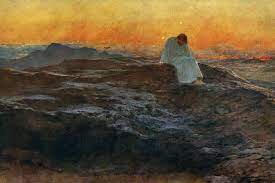
Throughout our holy scriptures, wilderness time is a time of disruption and reordering. The Greek word we translate as wilderness means “of uncertain affinity” – not quite sure to whom or where we belong. It’s an in-between time, a liminal space that offers us the opportunity to let go of what is harmful and rediscover what lies underneath all the clutter that we’ve let accumulate- the hurt and anger and resentment, the self-serving ways of hate and the need to control others.
Saint Mark gives us the most succinct version of Jesus’ baptism and time in the wilderness. And yet this is the 3rd Sunday since the beginning of Advent that we read overlapping bits of Mark’s version of Jesus’ baptism. I think perhaps it is important. As I’ve said before, we should never cease to be amazed that Jesus, God incarnate, steps in along side us in this new life of love. Jesus is our guide for our wilderness journeys.
Mark doesn’t go into any detail about how Jesus was tempted in the wilderness, only that he was. From Matthew and Luke we learn that with each of the tasks which Jesus is asked to do, or tempted by, what he’s really being asked is to stop trusting in God’s timing and way of living this life on earth as in heaven and take matters into his own hands, to choose for himself what is right and wrong, to chose self-gratification instead of participating with God in the building up God’s Kingdom.
Our annual church season of Lent is meant to mimic Jesus’ wilderness time, and is a time of intentionally stepping into the wilderness activities of disruption and reordering. Cleaning out our heart, soul, mind, and strength – our whole being – and letting go of that which has hidden the treasure of Who and Whose we are. It is a season of reflection and, yes, of repentance but remember that repentance isn’t punishing our selves for what we don’t like about ourselves. Repentance is changing our hearts and minds, reorienting our life to God’s Way.
And before we can repent, we must admit we need to. Being penitent is our acknowledgment that we need God and accepting God’s forgiveness for having chosen our own way.
Repentance is returning to our original identity as God’s beloved. Uncovering this amazing treasure that we’ve let get buried under cobwebs and dust bunnies of trying to survive this life on our own terms and joyfully exclaiming “hey, I’ve been looking for this!” From the very creation of all that is, God created us in God’s image and said we are good. God did not create us sinners; that is a label of our own making and our own choices.
Throughout the Old Testament, the Hebrew word that the NRSV translates as sinner is mostly used only in the wisdom books of psalms, Proverbs, and Ecclesiastes. The only time Jesus uses the word we translate into sinner is when he says that all of heaven rejoices when even one sinner returns to God, when the one who has missed the mark and been labeled by the worst part of their character is restored to the community of God’s Kingdom.
We must be careful with the labels we assign to ourselves and others. When we define ourselves or others by our worst characteristics or behaviors, we cover up the beauty of the image of God in all people. We are not sinners, we are human beings, beloved of God, who sin, who choose our own way of defining good and bad rather than God’s way.
To be clear, I’m not saying that we don’t often get things wrong, or miss the mark. We absolutely do, more often than most of us would like to admit of ourselves. We are human as God created us with the free-will to choose God’s way or to define good and bad on our own terms. My point is that we need to start our definition of who a human being is with Creation not with our departure from God’s intended way for us. Our original identity is that God created us good.
We can acknowledge our mortality, our humanness, without labeling ourselves or others as ‘wretched’. We can admit we have chosen not to follow God’s Way without labeling ourselves or others as ‘sinner’. We can repent, change our heart and mind and be open to the shaping of the Holy Spirit, tuning our will to God’s will without beating ourselves or others up. We can step into intentional wilderness time with each other as a way of healing and restoration from the harm that is done when we label others or ourselves by the worst of our behaviors.

Wilderness time isn’t punishment, it’s renewal and growth, reawakening to Whose and Who we are. Lent is a time to intentionally take stock of what in our hearts and minds is causing our own souls and others harm, hiding the treasure of our true identity under the dirt and cobwebs we let accumulate over time. A time to exclaim “I’ve been looking for this!” as we find the lost treasure of our true selves that’s been hidden under something that needs to be discarded. This is a time of growth when we can come across something and say “I don’t remember this but I sure can use it now!”
The treasure we need to uncover from the debris and dust of our lives is our original identity – beloved children created in the image of God. There is nothing wretched in that! Remember that you are God’s Beloved. Amen.
 Mother Nancy's Coffee Thoughts